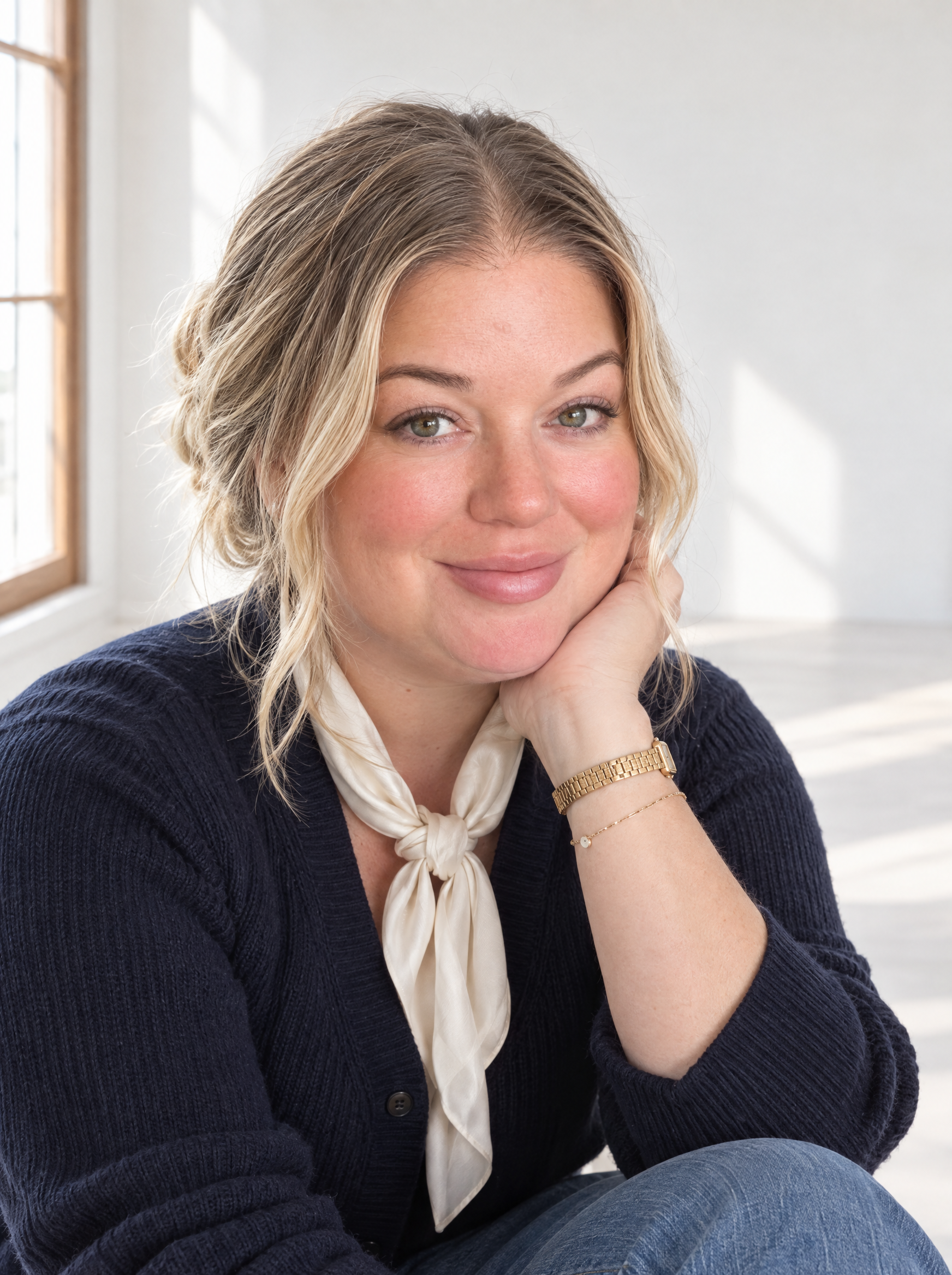
EP001: The Sunday Scaries: Why I Stopped Working Weekends
It's Friday night. I'm 24, my business is growing faster than I can keep up with, and I'm exhausted. So I make the same promise I always make. I'll just work this weekend. Get on top of things. Next week will be better.
I work Saturday. I work Sunday. I miss lunch with the girls. I can't catch up with Mum and Dad. I don't get to see my nan.
And by Sunday night, I'm still behind.
That sinking feeling has a name: the Sunday Scaries. For years I thought it was just the price of being in business. Twenty years later, I know it isn't. If I could sit down with 24-year-old Lauren, here's what I'd tell her.
1. A growing business is a good problem. A business without systems is a bad one.
My first business grew really fast, and that's a good problem to have. But I grew it without the systems and processes a business that size needed. So the business ran on the only system it had: me.
When everything lives in your head, every extra client becomes extra hours. Systems are what let growth add income instead of adding weekends. Build them before you need them, not after you've burnt out.
2. Working the weekend never gets you ahead
Every Friday I believed one weekend would fix it. It never did. Sunday night came and I was still behind, just more tired.
If you keep needing "one more weekend", the problem isn't effort. The problem is how the work gets done. More hours won't fix a business that's built to depend on you.
3. The things you miss are the things that matter most
Nobody warns you that the cost of a seven-day week isn't measured in money. It's measured in the girls' lunches you skip, the catch-ups with your parents you push back, and the visits to your nan that don't happen.
At some point you have to ask yourself, honestly, is it all worth it? For me, the answer was no. Not because I wanted less ambition, but because I wanted a business that made room for my life.
4. Being busy isn't the same as having sales
Later in my business I had all the pieces: a freebie, a welcome sequence, an email list. None of it sold. Clients came from referrals and from hustling in Facebook groups, and every time I got busy with client work, sales stopped.
I called it "ebbs and flows". It wasn't. I didn't have a sales strategy. Today I build sales engines, the right pieces in the right order, so sales keep coming in while I'm getting on with my life. That's what my Everyday Sales Engine framework is for.
5. Let AI take the load, not your voice
The tools I have now didn't exist when I was 24. Work that used to take me a whole day now takes an hour. But I'm picky about it. Not the rubbish AI that makes everyone sound the same. The good AI, the kind that does the heavy lifting while the strategy, the judgement and the heart stay yours.
What a Sunday CEO looks like now
Today my husband Brad and I run two businesses from five acres in the Perth Hills, with our son Toby, on two days of childcare a week. I don't work two days a week. We have two days of childcare and we work everything else around life. Systems are the reason that works.
That's what I mean by a Sunday CEO. She runs her business instead of it running her. She still lives a life full of joy. She makes the girls' lunch. She sees her family. She's ambitious, and she refuses to believe the only way to grow is more hours.
Because the women doing less are making more.
Listen to the episode
I tell this whole story, plus why I bought a digital magazine in 2017 and why I've just bought into a business again, on the first episode of my new podcast, The Sunday CEO. It's my diary: real talk about running a business as a woman and a mum, with stories that are good, sad, bad and inspiring.
If you're still working Sunday nights, pull up a chair. You're in good company.